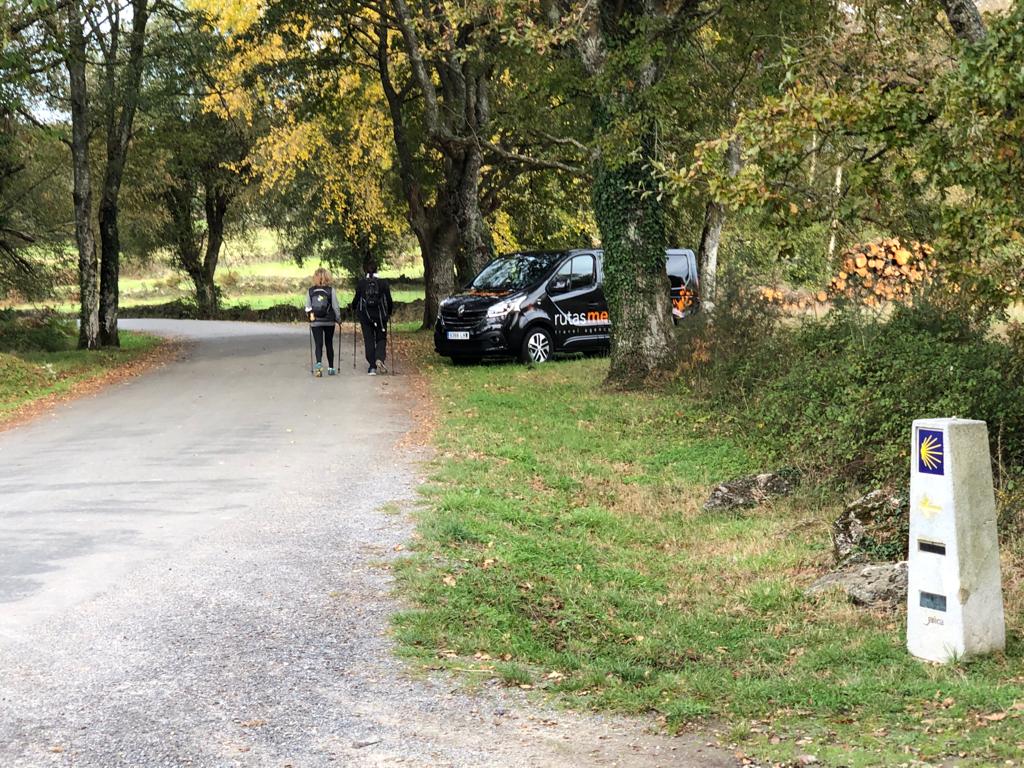

We’re not just any Camino de Santiago travel agency. We are pilgrims ourselves, and we plan every detail of your route so that you only have to focus on the best part: walking, discovering, and enjoying the journey.
We’re not just any Camino de Santiago travel agency. We are pilgrims ourselves, and we plan every detail of your route so that you only have to focus on the best part: walking, discovering, and enjoying the journey.
We’ve been organizing unique Camino de Santiago experiences for over 25 years. We’re pilgrims just like you, we know every corner of the way and take care of every detail so that you can focus on what truly matters: living your own Camino.
Our goal is very simple: that our pilgrims only have to worry about enjoying the Camino. We’ll take care of everything else.
Our team takes care of everything: accommodation, luggage transfers, Pilgrim Credential, 24/7 emergency phone assistance. Everything is ready so you can just walk, relax, and enjoy the journey. We are the organized Camino de Santiago agency you were looking for.
We also organize group departures, so you can share the experience with fellow pilgrims. Get in touch with us and let’s plan your Camino together.
Forget the hassle. Rutas Meigas offers the Camino de Santiago with support — your personalized and secure path to experiencing this iconic journey. We handle all the logistics so you can focus entirely on the experience
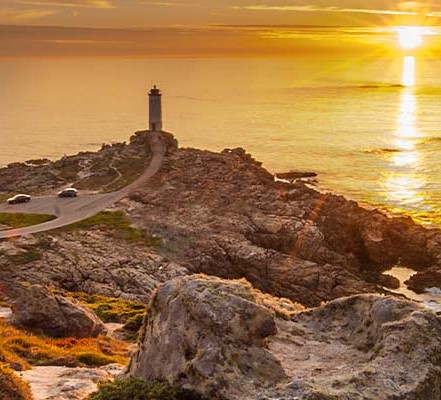
Thousands of people from all over the world have trusted us to make their dream of reaching Santiago come true, standing at the feet of the Apostle, and even continuing to the end of the world: Finisterre and Muxía.
We listen, we guide you, and we tailor each experience to your needs. Because every Camino is unique.
We take care of accommodations, luggage transfers, and all those little details that make a big difference, so your Camino is exactly what you want it to be.
Want shorter or longer stages? Prefer rural accommodations? Traveling with a group? We customize everything for you.
We’re here to help you plan your Camino de Santiago.
Send us a message or check the answers to the most frequently asked questions from other pilgrims.
We want you to enjoy your Camino de Santiago the way you deserve, just as you’ve imagined it, and in line with your expectations. That’s why the Rutas Meigas team takes care of every detail of your pilgrimage to Compostela. So you can focus entirely on living the experience to the fullest, step by step.
If you’re looking for a Camino de Santiago that is unique, safe, tailored to your pace and needs, Rutas Meigas is your travel agency.
We’ll book all your accommodations, handle luggage transfers between stages, include travel insurance for the duration of the Camino, and provide 24/7 emergency phone support should anything unexpected come up along the way.
We stay close to our pilgrims, from the very first step, all the way to Compostela.
Discover everything we can do for you as a Camino de Santiago agency: tailor-made organization, personalized routes, luggage transport, charming accommodations, and much more.
Thousands of people from all over the world walk the Camino de Santiago each year for reasons as varied as faith, a desire for adventure, or a need to stop and reconnect. Whatever the reason, they all agree on one thing: the Camino leaves its mark.
The Camino began as a pilgrimage route to the Cathedral of Santiago, where the Apostle’s remains rest. For many, this remains one of the main reasons for starting the Camino: to pray, give thanks, seek forgiveness, or simply keep a promise.
The Camino de Santiago passes through mountains, forests, valleys, villages, historic cities, and coastal areas. With every step, the landscape changes. You walk surrounded by history and nature, enjoying environments difficult to find on other routes.
Even if you start alone, the Camino unites you with others. You share journeys, conversations, laughter, meals… and often, lifelong friendships are formed. Pilgrims of different ages and countries meet and understand each other without needing to speak the same language.
The Camino can be tough. There are long stages, hills, fatigue, and blisters. But there’s also overcoming. Each day is a small achievement that fills you with confidence and strength. And when you reach Santiago, the pride you feel is incomparable.
No schedules, no rush, no notifications. Just you, the path, and your surroundings. The Camino de Santiago is one of the few places where you can completely disconnect and connect with what’s essential: your thoughts, your body, and your breath.
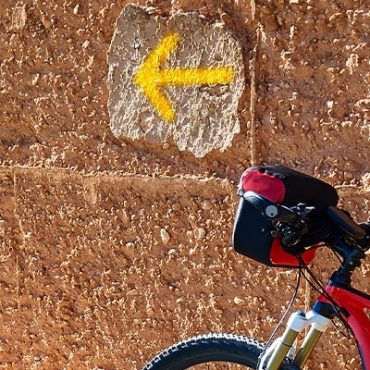
A hot coffee at dawn before starting the stage, a yellow arrow, a milestone indicating that there are fewer kilometers left. On the Camino, you learn to enjoy the little things that, in everyday life, go unnoticed. It’s a lesson in simplicity and presence (yes, what is now called mindfulness).
You don’t need to be an athlete or an expert. There are long and short routes, challenging and easy. You can do it alone, as a couple, with friends, or with family. The important thing isn’t how many kilometers you walk, but what you experience in each one.
If you want to forget about logistics, you can count on an agency like Rutas Meigas. We take care of everything: luggage transport, reservations, insurance, assistance… So you can just focus on enjoying your Camino.
The true end isn’t the Cathedral, or even Finisterre. The Camino continues when you return home. The lessons you learn while walking—patience, silence, strength, gratitude—stay with you. And that’s the most valuable part of this experience.
In a life filled with noise, the Camino is a space to listen to yourself. To reflect on your purpose, what you want to leave behind, and where you’d like to go. Sometimes it’s a starting point. Sometimes, it’s the push you needed.
You don’t need a grand reason to embark on the Camino de Santiago. Sometimes, all you need is a desire to experience something different, break away from your routine, or give yourself some time alone. The Camino de Santiago is there, waiting for you. And once you do, you’ll never come back the same.
November 24, 2025
November 24, 2025
September 24, 2025
Hundreds of thousands of pilgrims from all over the world come to Santiago de Compostela every year. The majority of them on foot, many by bike, some on horseback or even by sailboat, by sea.
What is it that moves people from almost every country in the world to devote a considerable amount of their time to the physical and personal exertion that the Camino de Santiago entails?
There are various reasons for this.
• Religious and / or spiritual
There are many reasons why pilgrims choose to walk the Camino de Santiago. Some do it for religious reasons, to honor the tomb of the Apostle Santiago, whose relics rest in the cathedral. But many begin this journey for spiritual reasons in a less religious sense; to find oneself and or to reflect, to gain distance from everyday routine and noise, or simply for personal liberation.
• Adventure and nature
Others just want to experience adventure and discover incredible landscapes, as well as companions of various origins (which is not important on the Camino). These acquaintances from which sometimes even friendships arise enrich us immensely.
• History and culture
There are also pilgrims who try to trace the history and culture that made the Jacobean tradition flourish in the various ways. Many of the cities with their corresponding historical-artistic representations were created under the influence of the Camino de Santiago to welcome and care for the pilgrims who have been coming to Compostela since the 9th century.
Whatever the reason that motivates you to set off, do not doubt that when you arrived in Santiago you found what you were looking for and much more. Experiences that will accompany and shape you for the rest of your life. because the Camino almost never ends in Compostela. A pilgrim always takes something home.
Given the different origins of pilgrims who have come to Compostela since the Middle Ages, there are many routes on the St. James Way. The most important are currently:
• The route of the French Way, the most traditional that started from Europe, is the most popular and also the busiest.
• The Route of the Portuguese Way, heir to the ancient Roman Way, known for the pilgrimage of Isabel of Portugal, Holy Queen.
• The route of the English Way, that of the Nordic and Anglo-Saxon pilgrims who came to the coasts of Coruña or Ferrol by boat and made pilgrimages from there on foot.
• The Camino Primitivo route, the first to be carried out in the 9th century by King Alfonso II of Asturias.
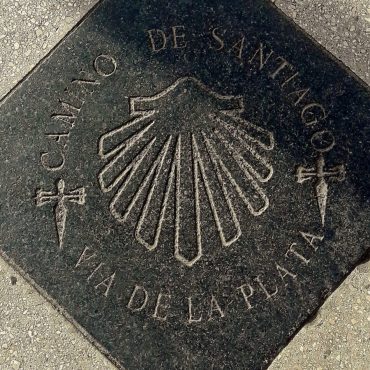
• The Via de la Plata route, the trade route from the south of the peninsula through which Almanzor came to Compostela in order to destroy it.
• The route of the Camino del Norte, arguably the most “rugged” and most spectacular along the shores of the Cantabrian Sea, a true landscape adventure.
• The route of the Camino de Invierno, which avoids the snow-capped peaks of O Cebreiro in the harshest weather months and goes through the magical Ribeira Sacra.
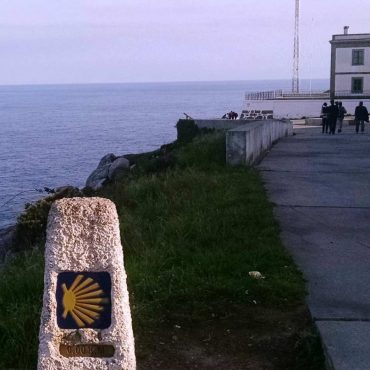
• The route to Fisterra, which follows the St. James Way to the end of the world.
The decision is very personal and most often doubts only arise when you walk the path for the first time, because it is important to note: The St. James Way is addictive. Although there is no statistical data on this, it is estimated that three in ten pilgrims walk one of the pilgrims more than once in their life. Some are said to have walked the Camino de Santiago over twenty times! Doubts about the route to be chosen therefore usually only arise the first time.
A large number of pilgrims begin on the French St. James Way, and the most frequented section here leads from Sarria to Santiago de Compostela. The French way is the most popular and also the most frequented way, so we will always meet many other pilgrims here with whom we can share these first experiences and discuss eternal doubts.
It is also a route with a very well developed service, very good signaling and relatively easy to walk in terms of the degree of difficulty. From our experience, everyone should choose the first route individually, taking into account their own interests, strengths and preferences.
We will of course help to resolve any doubts that may arise before the first pilgrimage and possibly recommend a route.
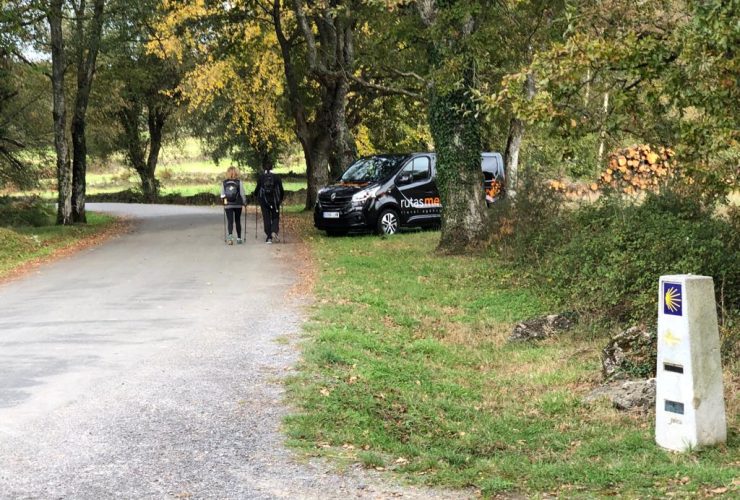
The routes of the Camino de Santiago are well signposted and it is rare to get lost. In addition, there are almost always other pilgrims to follow on the Camino de Santiago.
In any case, Rutas Meigas provides maps for all of the routes we organize. You can also access the route for each section of the individual paths on our website from your mobile phone via Google Maps. So there is hardly any chance to get lost.
Of course this is possible, it is also a completely different kind of experience than having it with friends or family, but it is really recomendable too. You have the opportunity to feel completely free, to follow your own rhythm ... but still meet other pilgrims to make new good friends.
Furthermore, we at Rutas Meigas organize all the details of your way, so that you don't have to worry about anything. At the end of each stage, your accommodation and luggage are waiting for you. You can also book many extras to feel even more secure.
Although there are currently many sections of the St. James Way that can be traveled on paved roads, it is always more interesting to drive them along the original routes. Therefore, it is ideal to adapt to any terrain and use a mountain bike.
However, if you already have a bike other than a mountain bike and want to ride the St. James Way with it, this is of course possible, although you have to be particularly careful on some sections. This decisión, of course, is up to you.
To complete the St. James Way by bike with Rutas Meigas, all you need is the desire, because our reservations for the St. James way on bike include:
- MTB bike with 27.5 "// 29" wheels and e-bikes
- Saddlebags
- Helmet
- Gel saddle cover
- Water bottle
- Tool bag (1 camera, patch, multifunctional Allen key, removable padlock)
- Air pump
When you arrive at the starting point of your St. James Way on the first day, your bike is ready at your accommodation. The bike then simply left in the last accommodation when you arrive at your destination in Santiago. We take care of everything else.
The St. James Way is a great experience, together with our dog. It is a route that takes rutes through the nature. Our dogs will really enjoy these long walks as just another family member.
The most common problem we encounter when we traveling with our dog is the accommodation, as not all accommodations allow dogs.
At the moment, Rutas Meigas offer you to do the French way of Sarria with two different expansion options with the dog. In each of the accommodations booked by us, your dog will sleep in the same room. Should you prefer to make another of our routes together with your dog, do not hesitate to contact us and we will be happy to check whether this is feasible.
“La Compostela” is the official document of the Church, which testifies that you have completed one of the routes on the St. James Way. In order to receive it, you have to stamp your pilgrim's pass on each completed stage.
Remember that you have to stamp at least twice on each stage, once in the town where you are staying and once during the stage.
As soon as you have arrived in Santiago, you can pick up your Compostela at the pilgrims 'office, which is located in Rúa Carretas, 33, very close to the cathedral, about three minutes' walk from the Plaza del Obradoiro.
If, under certain circumstances, you should prefer, it is also possible to document the Camino de Santiago with a digital pilgrim pass.
The pilgrim's passport, the “Credencial”, is the remnant of the document that has always accredited pilgrims on their pilgrimage. It is currently an official document issued by the Pilgrims' Office of the Diocese of Santiago de Compostela. It consists of 16 pages with space for the appropriate stamps.
Routes Meigas provides the pilgrim's pass at the start of the route. You will find this in your welcome package in the first accommodation we reserved.
Along the Way of St. James, on every chosen route, you will find numerous places where you can identify yourself as a pilgrim in order to receive the corresponding stamp: bars, restaurants, churches, chapels or hermitages, public institutions such as town halls etc. and even in the accommodation itself.
It is important that you have to stamp at least twice on each stage, once in the village where we are staying and once on the way.
In no case the first variant, because there are absolutely no regulations in this regard as to how long it should take and also because the way is YOUR way and you can cover it in the time you want, as you want and can.
Typically an average of twenty kilometers per day is covered, and the stages are divided into places of particular interest to pilgrims or depending on the availability of accommodation and services, but each of the routes can be adapted to you and your wishes / preferences.
It is also possible to do the way in multiple periods of time, at different times or even years, as we often don't have enough time to do it all at once.
Although the St. James Way is neither a sporting experience nor does it require special skills, it must be taken into account that the St. James Way requires certain physical demands. The difficulty is not necessarily to cover the kilometers on the first day. The challenge is to do this over several consecutive days. Most of us are not used to covering many kilometers for several days in a row. It is quite possible that our muscles are a bit sore at first, usually the feet are the most stressed and yet annoying blisters can often occur.
It is therefore advisable to complete a small and simple training session at least in the month before the start of the St. James Way. Simple walks or z. B. simply leaving the car and walking to work or running errands, climbing stairs, etc.
It is important that we try to incorporate different elevation changes and also different road surfaces into our routine as this is exactly what we will find on the Way and one of the things that will be the most strenuous for us.
It is also very important to do this little training with the shoes and socks that we want to use on the St.James Way. New footwear and new socks in the first stage are not a good idea, as they are an absolute guarantee for blisters on your feet. We should do the Way of St. James with breathable shoes and socks without seams, which have already been used and run in and to which our feet are already well used.
Even if walking with sticks is not absolutely necessary or compulsory, we recommend it to all our pilgrims. They are a great support when faced with bumps to avoid falls and slips, and they can help set the pace of our steps.
Nowadays it is very easy to get collapsible sticks that can be easily stored in any pocket or small backpack so that they do not disturb when we are not using them and have them on hand when we need them.
Yes, the Camino de Santiago can be done by children up to the elderly. The only thing to keep in mind is that the distance between the stages is affordable. At this point we can help to adapt your Camino de Santiago so that the sections are suitable for everyone.
The weather on the St. James Way depends on the route chosen and the time of the pilgrimage.
We are on Galician territory for the (last) hundred kilometers that are required to receive the Compostela. This means, in general, a mild climate with more or less frequent rainfall during most of the year. That means a very suitable climate for hiking, as there are no excessively high temperatures here in summer and the winters are also rather mild. In order to protect ourselves in the rain, it is usually sufficient if we have a thin raincoat / rain cape in our backpack just in case.
What should be taken into account are other areas with a somewhat more extreme climate, such as the Castilian plateau in the summer months, where temperatures can be very high and where we find few forest areas where you can protect yourself under shady trees. If you decide on one of these routes in summer, you should avoid the midday hours of the day to walk and always have enough water with you.
We also have to take into account the areas where we can find snow, fog and poor visibility in the middle of winter, such as O Cebreiro or Roncesvalles.
Well, like the choice of routes, the choice of season for the St. James Way is also very personal. It depends on which climate we like best. For example, some people find it too hot to hike in the summer months and prefer cooler temperatures for this. There are even people who prefer to go out in winter to enjoy the snow-capped areas of these beautiful landscapes.
When choosing what time to hike, we also have to take into account the region we are going to visit, as, for example, the route of the Portuguese Way, which runs through the south, has a pleasant climate all year round and the one further north Routes naturally have a somewhat colder climate.
Another criterion that we have to consider when choosing the time is the ambience in which we want to be on the St. James Way. If we want to meet many pilgrims and people, the busiest time is the end of spring, summer and the beginning of autumn. If we prefer a very quiet St. James Way, which is more focused on our introspection, it is ideal to do it outside of these seasons.
Whatever you prefer, it is always recommended to have a raincoat with you, as it can "drizzle" in Galicia as early as mid-August.
Comfortable clothes for hiking and also to change when you have reached the end of the stage and want to get to know the respective destination city.
- Breathable trekking or hiking shoes that have already been worn in. NEVER USE NEW SHOES TO WALK THE CAMINO.
- Comfortable flip-flops / slippers to put on at the end of each stage. It is important to have comfortable, open-toe shoes with you so that you can take off your hiking boots as soon as we have reached the destination. The feet have to breathe after such intense stress. In addition, if we are unlucky enough to have a blister, which is quite common, we appreciate wearing comfortable open-toe shoes.
- High quality and seamless socks for walking, but it is better not to be new to avoid the risk of chafing and blisters.
- Toiletries and moisturizers.
- Walking sticks, better without a metal tip. We recommend purchasing foldable sticks that can be conveniently stowed away when not in use.
- Sun protection.
- Sunglasses.
- Head protection: hat, cap, scarf ...
- Light raincoat
- A small backpack for each stage.
Since we at Rutas Meigas ensure that your luggage is transported between the stages, you are also welcome to pack street clothes if you want to go out later to enjoy the individual destinations or if you want to have an elegant dinner. You do not have to weigh so critically what you take with you and you may save yourself having to wash and dry the few items of clothing overnight, as is recommended in many places. Bring what you need, because we will transport it from one stage to the next.
Try to carry only the bare essentials for each stage in a small backpack so that you can walk more comfortably and easily. Leave all heavy objects in your luggage, which Rutas Meigas will transport to the next accommodation.
- Personal documents.
- Water. Although it is common to find sources of drinking water and places to shop, it is good to have enough water with you to have something to drink at all times.
- Sun and head protection.
- Raincoat / rain cape
- A small first aid kit with plasters (or special bandages for blisters), some bandages and tape.
Rutas Meigas provides you with maps of the individual stages that you can easily take with you. However, we also have the option of tracking them from our mobile phone.
Many people believe that the physical exertion associated with walking the Camino de Santiago will bring them home leaner. But don't be fooled, many pilgrims end up on their hips with a few extra pounds at the end of their journey.
Let us not forget that all the areas that the Camino de Santiago passes through have an overwhelming gastronomic wealth. So eating well and trying new things is part of the experience.
It is important to have a good breakfast before undertaking the day's great exertion, without it being an overly heavy breakfast which makes us feel excessively bloated when walking.
The lunch meal is most common during the stage, so pilgrims usually have a light lunch. If we stop by Melide at lunchtime, we must definitely not avoid trying a good portion of squid.
Meal time is the time to enjoy a well-deserved reward after exertion, especially if it is in the company of other pilgrims. It's time to enjoy all of the specialties of the region you are in and have a good conversation. Of course, without forgetting that we will continue the next day.
You don't need to worry about supplies, because on the routes of the Camino de Santiago we can find almost all services, bars, cafes, small restaurants, shops and supermarkets. However, we recommend that you always have a bottle of water with you as it is very important to be well hydrated at all times.
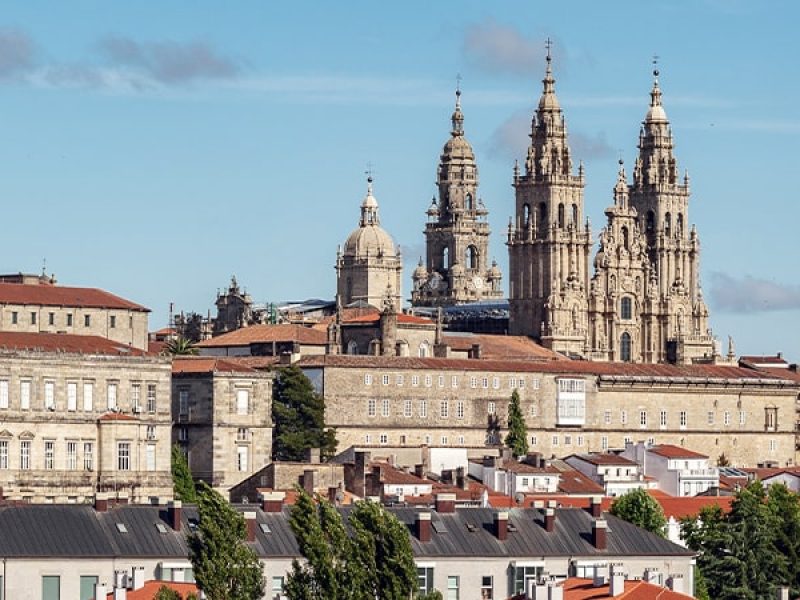
Traditionally, the St. James Way ended at the north gate, called the Puerta del Paraíso or Francígena (facade of the Azabachería) or at the south gate (facade of the Platerias), although nowadays all pilgrims choose to end their journey in the spectacular plaza la Plaza del Obradoiro. When you get there, pause for a while to rest and be amazed by the incredible surroundings that surround you. It will be a moment of great emotion, a moment of celebration, sharing with other pilgrims, but also of introspection, of remembering everything that you have experienced and achieved. Arriving at the Obradoiro is the culmination of all efforts, and when you get there you will feel that all the efforts are worth it. Then you can go to the pilgrims office to pick up your well-deserved Compostela. Don't worry if there is a long line. With the shift system, you will be notified on your phone when it is your turn, so you can take a stroll through the old town or comfortably wait in one of the bars around the office.
When you arrive at your hotel, Rutas Meigas has already left your luggage there so that you can freshen up and then comfortably go back out to explore the city. You will certainly want to take part in the pilgrim mass, which is currently celebrated at 12:00 and 18:00 in the afternoon. With Rutas Meigas you also have a guided tour inclusive through the historical center with one of our official Galician tourism guides.
Of course, it is also essential to enjoy the wonderful gastronomy that Galicia offers and that you can find in the many bars and restaurants of the city. In Compostela it is a tradition to drink wine in the many streets of the old town. Not to forget that we are invited to a tapa here with almost every drink.
If you are staying longer in Santiago and want to learn more about Galicia, we at Rutas Meigas offer an extensive catalog of excursions from Santiago.
It is a liturgical celebration that is celebrated in the Cathedral of Santiago de Compostela. It begins by reading the list of pilgrims who have passed through the pilgrimage in the last twenty-four hours, including the starting points of their pilgrimage and the nationalities or provinces from which they come.
Currently, the pilgrimage mass is celebrated twice a day at 12:00 p.m. and 6:00 p.m
The botafumeiro is a symbol of the Cathedral of Santiago de Compostela and, ultimately, of the city itself. It is certainly the largest censer in the world. He weighs 53 kilos and measures 1.50 meters. Dipped in silver, it hangs on the twenty-meter-high central dome. Eight men, called “tiraboleiros”, move it (or dance it) through a system of pulleys, causing it to travel at a speed of almost seventy kilometers per hour.
We find references to the botafumeiro as early as the 14th century in the Calixtino Codex, where it is referred to as "Turibulum magnum". Its original use was to perfume the cathedral and remove the bad smell of the pilgrims, who in many cases even slept in the temple.
The botafumeiro works on the main celebrations of the Cathedral of Santiago and pilgrimage events requested by the cathedral.
If you have any questions about the Camino de Santiago that you cannot solve yourself, you can always contact the Rutas Meigas emergency number.
Clear the way and with an open mind. It is a learning path about the world, about life and about yourself. You will meet many new people from many countries and many fields. You will surely find more than one friend for life. You will also find out new things about yourself. Accept what you find out on your route, because what you learn on the Camino de Santiago will be with you forever.
Be respectful with the rest of the people you meet and the environment as well. The Way of St. James crosses many natural areas. Leave everything as you found it.
Try to forget your cell phone. Although it is recommended to carry it with you and it can also be of help when we follow the routes, try to carry it in your backpack or in a bag and use it as little as possible. Concentrate on the nature around you, on the people you meet and of course on yourself.
Be a pilgrim, not a tourist.